Cuteness is not what you think it is
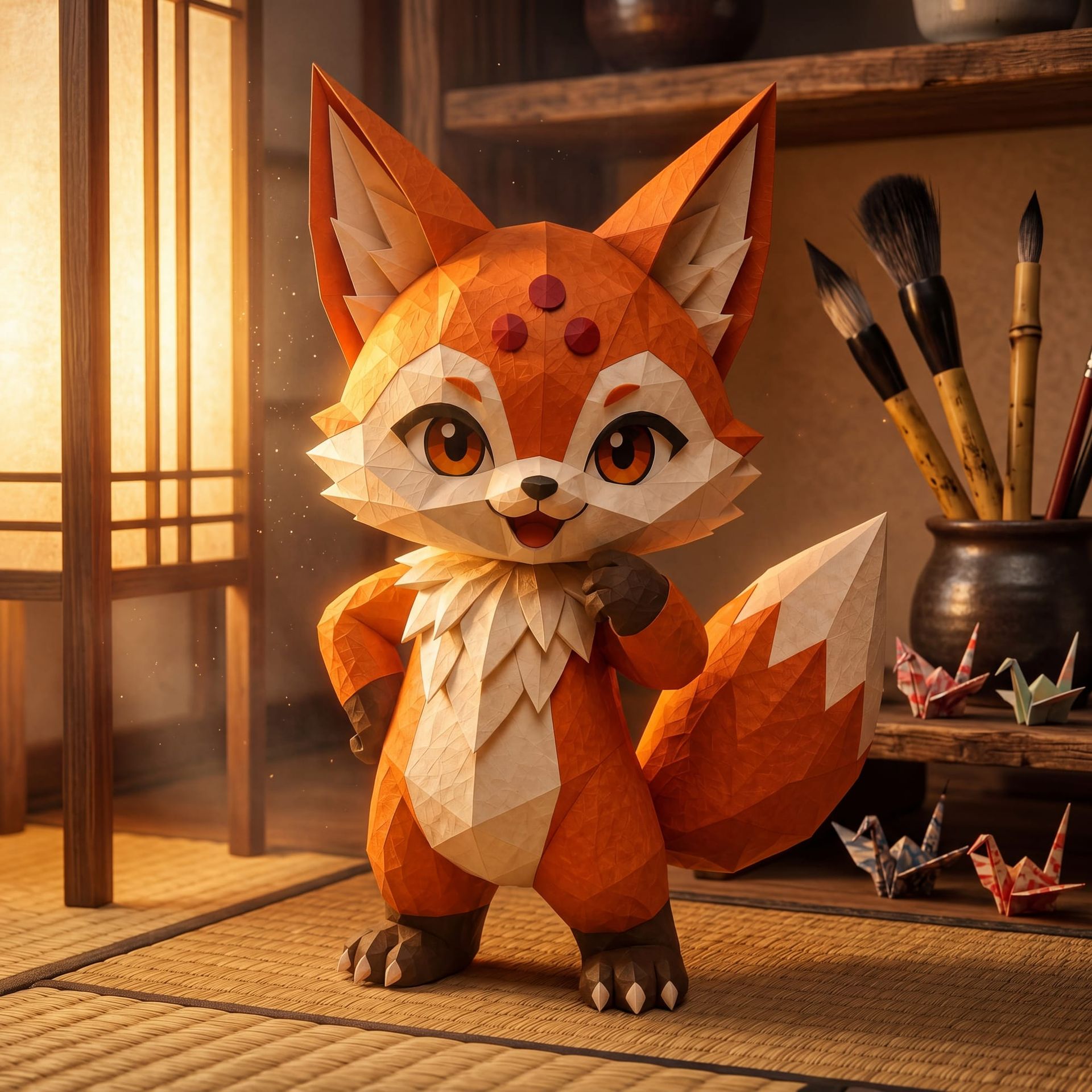
A few months ago, a founder named Paul booked a Better Call Ouss.
I take a lot of these calls. Most of them blur together. Founders come with a deck, a market, a problem with their cofounder or their cap table. We fix what can be fixed in an hour and we move on.
Paul came with a mascot.
He had built Masko, a tool that generates animated characters with AI. You describe a character, or upload one image, and the system produces the poses, the animations, the emotional states. The Duolingo owl, but as a service. Anyone could have their own.
I remember thinking two things at once. The first: this is a toy. The second: the most important companies I have ever seen all looked like toys at this exact stage.
So I did something I rarely do on these calls. I stopped advising and started scheming. I told Paul the business model was wrong, that selling credits to designers was pricing a platform like a tool. I told him what I thought Masko could actually become. And then I invested, because there are ideas you can only see clearly once you have skin in them.
Here is the idea.
The layer nobody is building
Everyone right now is building intelligence. Bigger models, better agents, longer autonomy. The machines are getting smarter every quarter and the race is fully priced in.
Almost nobody is building the layer where that intelligence touches a human being.
Think about what your AI actually looks like today. A terminal. A chat box. Gray, cold, optimized, sterile. The most powerful technology of our lifetime presents itself with the warmth of a tax form.
Masko starts attacking this with something almost embarrassingly mundane: a notifier. Your coding agent finishes a task, and instead of a silent log line, a small character on your screen tells you. It waves when the build passes. It looks worried when something breaks. It calls you back when the machine needs you.
A notification mascot. That's it. That's the wedge.
But wedges are supposed to be mundane. The first thing Amazon sold was books. The first thing the iPhone replaced was a keypad. You earn the right to become a layer by first being useful in the smallest, most ordinary way, every single day, on someone's screen.
Because the vision is much larger. Masko Premium will let you vibe code the interaction itself. Your own notifications, your own little productivity apps, your own rituals, built around a character that is yours. Not an interface you were given. An interface you decorated, shaped, raised.
The goal is simple to say and very hard to build: when you work with machines, you should feel joy. You should feel playful. The machine should feel like company.
Which brings me to the real thesis. Because behind Masko there is a theory, and the theory is about cuteness.
A theory of cuteness
Most people think cuteness means small, sweet, childish, pretty. Decoration for people who haven't grown up yet.
I think cuteness is a counter-system.
Look at what we call "serious." Serious means stripping things away. Strip the color. Strip the emotion. Strip the ornament, the softness, the fantasy, the play. What remains is supposed to be professional. Neutral. Adult. We built entire cultures on this subtraction, and then we wondered why everything feels dead.
Cuteness begins exactly where that seriousness becomes coercive. It is a refusal of emotional austerity. The pink, the kawaii, the decorated journal, the fairy dress, the cyberdeck covered in stickers: each one is a way of saying, I will not let the world take away the parts of me that feel things.
And here is what almost everyone misses. Cuteness is not weakness wearing a costume. It turns vulnerability into agency. It is not being seen as soft. It is choosing softness as the frame through which you look back at the world. There is a difference between being fragile and deciding, in full knowledge of what the world is, to stay open anyway.
It protects the child-self without becoming childish. It goes back to the things you loved before shame reorganized your desires, before prestige told you what was acceptable to want. The kid who drew characters in the margins of his notebooks did not disappear. He just learned to hide.
Cuteness also has a body of knowledge behind it that we pretend not to see. Color is not decorative excess; in most human cultures it carried emotion, mysticism, meaning, and we drained it out of our offices and our software in barely a century. Ornament is not waste; decoration is care made visible. The journal someone illustrates every evening, the desk someone arranges, the device someone customizes: these are holy hours. Devotion, practiced on objects.
Even the uselessness is the point. Cuteness refuses to optimize, and that refusal is precisely what makes it resistant to productivity culture. You cannot KPI a Hello Kitty. And Hello Kitty herself reveals another mechanism: her face is almost blank, and that blankness is the feature. People project their own emotion into her. Cute things give your feelings somewhere to land. Researchers who study the baby schema know this is not sentimentality; roundness and softness measurably calm the nervous system and invite care. Cuteness regulates us.
So why is it dismissed? Be honest about the answer. Cuteness is marginalized because it is associated with the marginalized. Girls. Femininity. Queerness. Children. Craftspeople. Eastern aesthetics. Internet kids. Emotional life itself. We didn't conclude that cuteness was unserious. We decided the people who loved it were.
I'll say it plainly: cuteness is not innocence. It is courage. Its softness is not the softness of never having met the world. It is the softness of someone who met the world and refused to become only armor.
Re-enchanting the machine
Now put the two halves together.
We are about to spend the rest of our lives in conversation with machines. Every interface decision being made right now defaults to the serious aesthetic: gray, cold, efficient, emotionally mute. The subtraction culture, encoded into the most intimate technology ever built.
Masko is a bet against that default. A bet that technology can be intimate, decorated, poetic, companion-like. That the layer between humans and AI should not be a terminal but a character. That joy is not a feature you add at the end; it is the architecture.
It starts with a small creature that waves at you when your code compiles.
It does not end there.
No spam, no sharing to third party. Only you and me.